
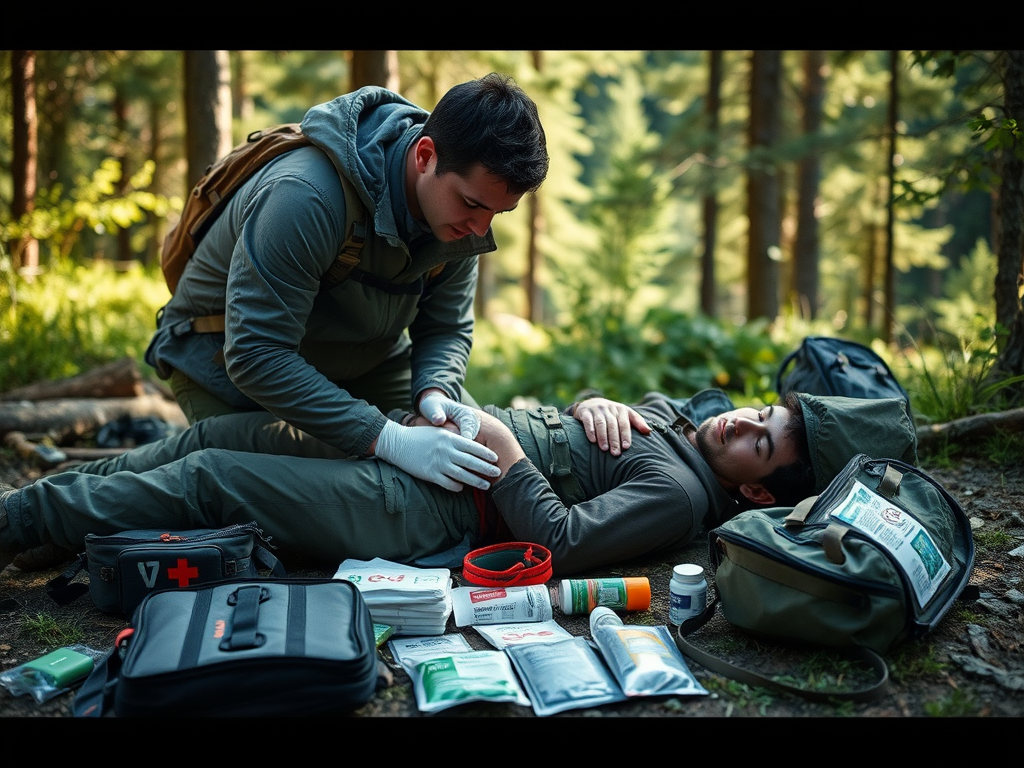
Why Wilderness First Aid Matters
When you’re deep in the wild, hours or even days from professional medical help, knowing how to respond to an emergency with basic wilderness first aid skills can mean the difference between life and death. Poor weather and long travel to professional medical help can complicate any medical situation beyond what you might expect from medical issues that arise closer to civilization. This makes it imperative to know how to diagnose and stabilize a medical problem long enough to get help. Wilderness first aid isn’t just a nice-to-have skill; it’s essential for anyone venturing beyond cell service and paved roads. Learn the basics, pack smart, and be prepared to take care of yourself and others when the wild throws a curveball.
Always Make Sure to Pack a Wilderness First Aid Kit
A basic knowledge of wilderness first aid is absolutely essential, but having the necessary supplies and tools will greatly amplify your emergency first aid capabilities. These tools and supplies should be packed with you anytime you venture into the wilderness in a compact first aid kit. A basic wilderness first aid kit should always include bandages, medical guaze, medical tape, and an antiseptic at bare minimum. You don’t have to break the bank and become a walking hospital, you only need enough supplies to treat and stabilize a person with wilderness first aid until they can receive proper professional treatment. For a more complete list of what should be included in your wilderness first aid kit, check out our tips for packing you first aid kit.
The Golden Rules of Wilderness First Aid
1. Stay Calm and Assess the Scene
Making sure the area is safe for you and others should always be your first concern. No matter how well versed you may be in widlerness first aid, it won’t do an injured person any good for you to rush in only to have a similar accident befall you. Identify immediate threats like unstable terrain, wildlife, or fire. Not only will identifying any of these potential threats help keep you safe, they may provide clues as to what injuries are present and how to treat them.
It is also very important not to move the person until you have diagnosed the extent of their injuries unless their life is in immediate danger where they are. There may be a risk of a spinal injury, and moving the injured person carelessly could cause permanent damage. If you are unsure whether the person has suffered some kind of spinal injury, treat them as if they do have a spinal injury until you are convinced they don’t have one.
2. Check Responsiveness and Breathing
If the person is unconscious, check for breathing and a pulse. Hold a hand an inch over the person’s nose and watch their chest for typical rising and falling to check for breathing. For checking a person’s pulse, you should know where to find the carotid artery and the brachial artery. The carotid artery runs in the soft spot of the neck, right next to the throat. The brachial artery is just below the wrist on the side where the thumb is located. Turn the wrist so the palm is facing upwards and feel just outside the ligaments of the wrist. Use two of your fingers to gently press on the carotid or brachial artery. If you are unsure how to find these two arteries, check for them on yourself right now.
If the person is conscious, start by talking to them. Make sure they can hear you and give a response, even if just a whisper or nod of the head. Ask them questions about their condition so they can tell you what the problem is and what happened. Try your best to keep the injured person calm and relaxed as much as possible. If they seem barely coherent, check their breathing and pulse as well since they may not realize it if they are struggling to breathe.
If you are in an area where you can call for professional assistance, do so right away. If you are out of phone or radio range, or simply don’t have those technologies with you, and you are in a group, you can send a couple of members of the group to get help. Always strive to stay in groups of at least two, however, just in case the messenger has an accident of their own and needs their own assistance.
3. Control Bleeding
If the injured person is bleeding, apply direct pressure to the open wound using a clean cloth or bandage. This may require you to move, remove, or cut articles of clothing away from the wound; try to do so without moving the injured person as much as possible. If there is more than one bleeding wound, identify the most serious or most life-threatening and treat that one first.
Start by washing any foreign materials from the wound with clean water. If an antiseptic is available, use it now before wrapping the wound to reduce the risk of infections, which is significantly higher when outdoors. When wrapping or covering the wound, try to close the wound before binding it firmly, but not so tight that it starts cutting off circulation to the area. Closing the wound before wrapping can slow the rate of bleeding. Once you place the first layer of cloth or bandage on the wound, try not to remove the cloth to inspect the wound, or you could risk reopening it. If there is excessive bleeding, add a second layer of cloth or bandage without removing the first layer. If they continue to bleed through you can swap out the second layer.
If possible, elevate the body part with the bleeding wound above the heart and head. This will slow the blood loss naturally. You can prop an injured arm or leg on a pack or a nearby log or rock if needed. A tourniquet should only be used as a last resort if the bleeding appears life-threatening. Tourniquets carry the risk of limb amputations if done incorrectly or if left on for too long; a steep price to be sure, but not as bad as dying.
4. Treat for Shock
You should always check an injured person to see if they have gone into shock. Lay the person down if they are not already lying down. Check if their skin is pale or gray, and feel their skin to see if it feels unnaturally cool or clammy. Check to see if their pupils are dilated (enlarged) or if they feel dizzy or nauseated. An excessively high heart rate or quickened breathing could also indicate that a person is going into shock.
So long as there is no suspicion of a spinal injury, try to elevate the injured person’s legs. Stick a backpack, log, or a rock under their feet to keep their legs elevated. If they are vomiting, turn the injured person on their side, still keeping their legs elevated as much as they comfortably can. If the person is wearing tight clothing, try to loosen or remove it if possible and keep the person warm with a blanket or placing a coat on top of them.
5. Clean and Dress Wounds
Once the situation is somewhat stabilized, you can begin cleaning and dressing any open wounds, whether bleeding or not. Remove any emergency bandaging you may have used up to this point to better inspect the wound. You will need to clean as much foreign material from the wound as possible, rinsing with water as needed. Only use water that is safe enough to drink; dirty water increases the risk of infections.
Place a clean layer of bandaging or cloth on the wound, using an antiseptic if available. Add more layers as needed if still bleeding excessively, and secure the bandaging in place by wrapping cloth around the injury or using medical tape if available. For prolonged periods before you can get medical attention, try to switch out the bandaging for clean bandages once per day until you can get professional medical help.
6. Immobilize Suspected Fractures
After any of the above situations have been resolved, you can now treat any suspected fractures or broken bones. Start by removing any clothing around the broken or fractured bone, cutting it away if necessary.
Try to find some kind of padding for your splint. Extra clothing, sleeping bags, anything soft. If you are in an area with dense moss, that could work as padding as well. Wrap the padding around the injury as best as possible and use two or more long, rigid items (sticks, tool handles, etc.) to complete the splint, using a belt or any kind of cordage to secure the splint in place. Don’t tighten too much or you risk cutting off the blood flow in the extremity. Wherever possible, try to immobilize the joint directly above and directly below the broken or fractured bone.
7. Monitor for Infection
Always monitor any open wound for infection after treatment, especially if you are going to be in the wilderness for an extended period. The wilderness is full of bacteria and other microbes that can cause an infection that can progress to amputations or death if left untreated. Fevers, redness, swelling, pus, or increasing pain may signal infection.
Keep wounds clean and dry whenever possible.
Make Sure To Pack Your First Aid Kit
Knowing how to treat an injured person in the wilderness doesn’t do any good if you don’t have the toold or supplies to effectively treat them. Make sure you have packed a first aid kit with all the essential supplies you will need. And don’t leave it at you camp, make sure to carry your wilderness first aid kit with you when you go on your next outdoor adventure.
 Rugged Edge
Leave a comment