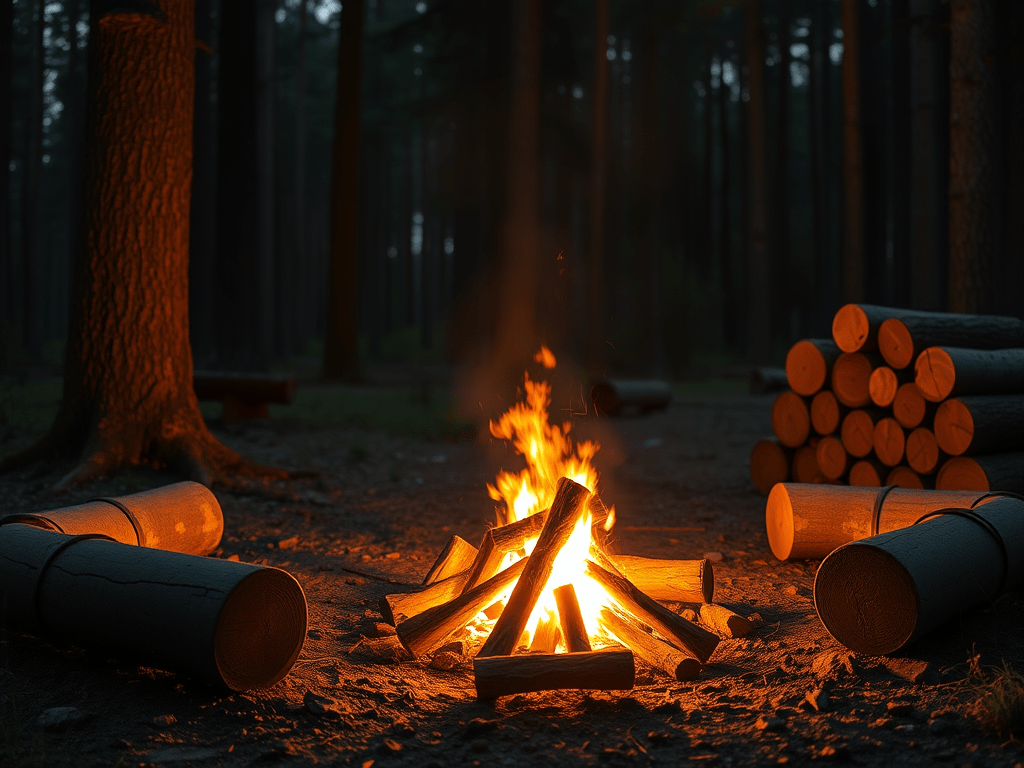
Few outdoor skills are as vital or as satisfying as knowing how to start a campfire. Whether you’re cooking a meal, staying warm, signalling for help, or keeping predators at bay, a good fire can make all the difference. Here’s a breakdown of the key components and best practices to get your fire burning fast and efficiently.
Understanding the Fire Triangle
When starting a fire, it is important to remember that a campfire is essentially a chemical reaction brought about when the necessary conditions, or elements, are met. A successful fire needs three elements: heat, fuel, and oxygen. Too little of any one of these will result in frustration and failure. Structuring your fire properly ensures all three elements are present and balanced.
Think of it like cooking. The fuel and the oxygen are like the ingredients in your recipe, and the heat is the catalyst that changes the nature of the ingredients into something different. Coincidentally, heat is usually also the catalyst in cooking. Where firemaking differs from cooking, however, is that it is a reaction that will continue perpetually so long as there are ingredients because the fire is creating the catalyst, the heat.
That is why it is important to understand the fire triangle before making a campfire. The fire can build on itself and spread anywhere there is fuel. The way to prevent the spread of the fire is to either remove the fuel (making sure the area around your intended campfire is clear of anything that can accidentally catch fire) or by removing the oxygen (usually by covering the fire with dirt to restrict the oxygen that can reach the fuel). Dousing the flames will reduce or eliminate the heat element to also put out a fire, but the deasibility of this approach will depend on your nearby water supplies. Of the three fire prevention options, the best and easiest is far and away removing any nearby fuel. As they say, an ounce of prevention is worth a pound of cure.
The Three Stages of Fuel
1. Tinder
Tinder is the smallest, most flammable material used to ignite your fire. It catches a spark or small flame and burns quickly, creating a larger heat source that you can then use to ignite the next stage of fuel, kindling.
Examples:
- Dry grass or leaves
- Birch bark
- Cotton balls (especially with petroleum jelly)
- Commercial fire starters
- Paper products, shredded
Tips:
- Keep tinder bone-dry
- Gather more than you think you’ll need (especially if not using matches or a lighter)
- When lighting, focus your flame (or spark or ember if not using lighter or matches) on the base of the tinder. Fires like to climb upwards.
- If there is a breeze or wind, try to block the wind with your body as you light the tinder
2. Kindling
Kindling is larger than tinder and helps transition the flame to larger fuel. Never use anything thicker than your thumb as kindling or the tinder will burn out before the kindling has a chance to ignite. It should be bone dry so it can catch fire quickly once your tinder is burning.
Examples:
- Pencil-thin twigs
- Dry sticks the width of your finger
- Feather sticks (shaved wood curls)
Tips:
- Make sure it’s dry and loosely stacked to allow airflow. There are many different method for stacking kindling, known as fire lay structures, but the two most common are the teepee method and log cabin method.
- To build your fire efficiently, make sure the kindling is being stacked in a vertical manner so the flames can climb and grow bigger. The teepee method naturally has some verticality, but a method like the log cabin will require you to stack kindling on top of one another to achieve verticality.
3. Fuel Wood
Fuel wood sustains your fire. Fuel should generally not be thicker than your forearm, and ideally should be split to allow for better, more efficient burning. It should be added once you have a strong flame from your kindling, starting with the smallest and thinnest fuel you have and working your way up to the thicker pieces of fuel.
Examples:
- Wrist-thick branches or logs
- Thicker logs split at least once with an axe or hatchet
Tips:
- Avoid green or freshly cut wood; it’s harder to burn and smokes excessively
- Avoid rotten wood. It burns poorly and smokes worse
Oxygen and Starting a Campfire
As stated above, oxygen is one of the essential building blocks of any fire. But one must be careful on how oxygen interact with your fire depending on the fuel stage you are on.
When using the tinder, it is best to gently blow on any small embers or glowing pieces of tinder if you are having trouble getting it to ignite. Take care in how much is applied, however. To much airflow can rob the embers of the necessary heat and put the flegling flames out. This airflow can come from either your blowing on the embers or the natural wind
At the tinder stage, I don’t recommend adding any unnecessary oxygen to the fire. At this point the flames should be stabilizing enough to not need it. Excessive wind can still threaten to put the fire out, though, so you should still be trying to block the wind with your body. If the flames are dying out at the kindling stage you can try to blow on the embers to try to get something to reignite, but otherwise you should only be growing the fire with fuel.
At the wood fuel stage, there should be no need to add any extra oxygen, and the fire should be strong enough that you shouldn’t need to worry about the wind putting the fire out. You could add oxygen to the fire with a bellows-like system and causing it to burn brighter and hotter for a moment, but that shouldn’t be necessary unless you are forging metal over your camfire. The only oxygen related concern is if wind blows an ember into some nearby brush and starts a fire you have to put out. Definitely watch out for that.
Best Practices for Starting a Campfire
- Prepare your site: Clear debris, build a fire ring with stones, and ensure the area is safe.
- Add kindling gradually: Feed kindling slowly to avoid smothering the flame.
- Feed fuel wood carefully: Once your kindling is fully lit and burning strongly, place small pieces of fuel wood onto the growing fire.
- Don’t rush: Let the fire build gradually, ensuring airflow throughout.
- Keep a shovel with a supply of dirt or a bucket filled with water nearby to prevent the fire from spreading or to deal with any embers that may jump out of the fire.
Safety Reminders
- Never leave a fire unattended.
- Always have water or dirt nearby to extinguish the fire.
- Fully douse and stir the ashes when you’re done to prevent wildfires.
With the right prep and know-how, starting a campfire doesn’t have to be a struggle. Mastering the use of tinder, kindling, and fuel is the first step to becoming more self-reliant in the wild.
Learning how to make a campfire is only one of the skills you will need to master the outdoors. Make sure to check out our skills page for tips on everything you need to know.
 Rugged Edge
Leave a comment