
When you’re caught in a survival situation, the ability to start a fire can mean the difference between life and death. Fire provides warmth, cooks food, purifies water, and can even be used for signaling. But what happens when traditional fire-starting tools like matches or lighters are missing, wet, or unusable? Fortunately, your home is full of items that can double as emergency fire starters. These are items you can light up if the lights go out for an extended period or things you can pack on your outdoor adventures to ensure you can always create a life-saving flame. Here are nine common household items that can help you get a fire going when you need it most.
Before attempting to use any of these items to start a fire, you should make sure you know the basics of starting a fire. And since you may not always have conventional firestarting items such as matches and lighters, learning how to start fires without them is an essential skill to have.
1. Cotton Balls and Petroleum Jelly
Cotton balls coated in petroleum jelly are one of the most reliable emergency fire starters. Cotton ignites quickly, and petroleum jelly acts as a fuel source that helps the flame last longer. Together, they create a fire starter that can burn for several minutes, giving you time to build your fire properly. Works well with all matches, lighters, friction fires, and more.
How to Use:
- Rub petroleum jelly thoroughly into the cotton ball.
- Fluff the cotton slightly to expose fibers for ignition.
- Light with a spark, lighter, or match.
Why It Works: Cotton provides a quick ignition point, while petroleum jelly adds sustained burn time, even in damp conditions.
2. Chapstick (Lip Balm)
Chapstick is typically made from waxy, petroleum-based ingredients, which are highly flammable. Smearing chapstick on paper, cloth, cotton balls, or died grass or moss can extend the flame’s duration and help ignite your main fuel source. Works well with matches and lighters, but methods involving creating embers, like friction fires, will still be difficult to start. Once the ember creates a small flame within the chapstick infused tinder it will be far easier to light the bigger kindling however.
How to Use:
- Apply chapstick to a cotton ball, tissue, or other tinder.
- Light with any ignition source.
Why It Works: The wax content provides a longer burn time than dry tinder alone.
3. Hand Sanitizer (Alcohol-Based)
Alcohol-based hand sanitizer is a dual-purpose survival item: it disinfects and easily ignites. Be sure to check the label—alcohol-free sanitizers won’t burn. Works well with matches and lighters, and might work well with a ferro rod if you can strike quickly. Friction fires and other time consuming firestarting methods won’t benefit as the alcohol will evaporate too quickly.
How to Use:
- Squeeze a small amount onto your tinder pile.
- Light immediately as the alcohol can evaporate quickly.
Why It Works: High alcohol content (60% or more) makes it an effective, fast-burning fuel.
4. Hairspray
Aerosol hairspray is highly flammable and can be used to assist in fire-starting. It can coat tinder to make it catch fire more easily. Never spray it directly on an open flame, if the flame gets into the can or if the contents get too hot the can could explode in your hand. Works well with matches and lighters, but much like the alcohol hand sanitizer the flammable chemicals may evaporate too quickly for other firestarting methods.
How to Use:
- Spray onto dry tinder or kindling to make it more flammable.
- Exercise caution—never spray directly into a flame.
Why It Works: The propellant and chemicals in hairspray ignite quickly and can spread flame efficiently when used properly.
5. Dryer Lint
Dryer lint is one of the most flammable materials commonly found in any home. It catches fire almost instantly and is ideal for starting fires. Works well with any firestarting method. This is a great firestarting option as it is a free byproduct of doing your laundry.
How to Use:
- Collect lint from your dryer’s lint trap.
- Use alone or coat with chapstick, cooking oil, or hand sanitizer to increase burn time.
Why It Works: Dryer lint consists of fine, dry fibers that ignite with the smallest spark.
6. Crayons
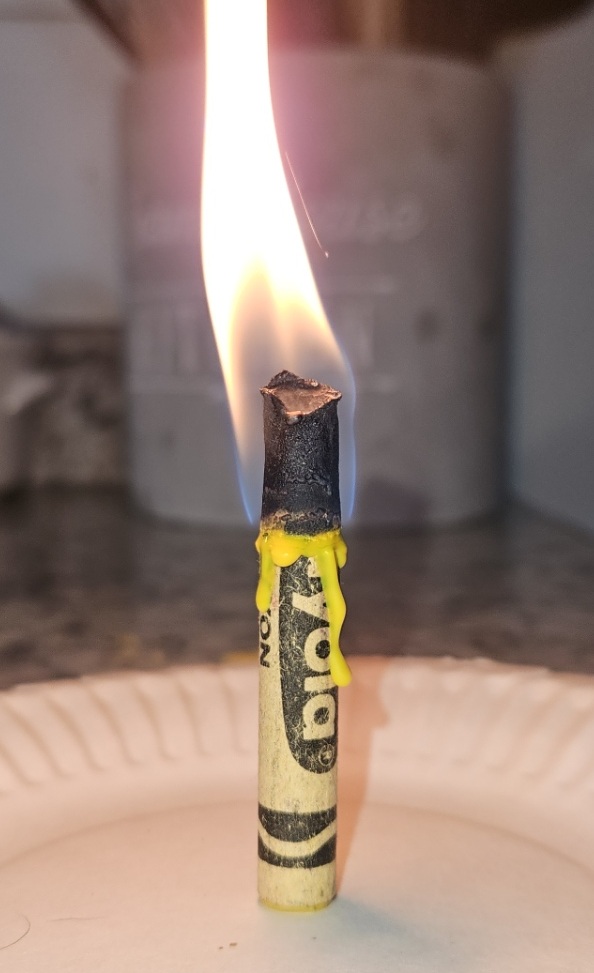
A crayon is essentially a small candle made of paraffin wax and pigment. In an emergency, it can burn for several minutes, making it a useful fire starter or temporary light source. Unlike some claims on the internet, the crayon will only burn for about 5-10 minutes in my experience. It takes a flame to start, so only viable with matches or a lighter. Sparks or embers will be unlikely to generate enough heat for ignition.
How to Use:
- Break or cut the tip of a crayon off.
- Light the crayon paper wrapper. This may take a couple of seconds of contact with the flame.
Why It Works: The wax acts as a slow-burning fuel that provides steady heat to ignite larger fuel. Can also function as a short term emergency candle.
7. Cooking Oil or Vegetable Oil
Household oils like vegetable, canola, or olive oil can be used to coat tinder to prolong the flame. They burn steadily and can help get damp or stubborn materials ignited. Works well with any firestarting method.
How to Use:
- Dip cotton balls, paper towels, or cloth in the oil.
- Light and use as a sustained ignition source.
Why It Works: Oils are slow-burning fuels that can extend the burn time of fast-igniting materials.
8. Rubbing Alcohol
Rubbing alcohol (isopropyl alcohol) is a potent fire-starting aid found in most households. It ignites easily but must be used carefully due to its rapid evaporation and flammable vapors. As with the alcohol based hand sanitizer, will only be useful with quick ignition fire starting methods like matches and lighters. Won;t work with friction fires.
How to Use:
- Pour a small amount onto a fire base or tinder.
- Light promptly before it evaporates.
Why It Works: High alcohol content makes it extremely flammable, offering a quick-start solution when dry tinder is scarce.
9. Paper Towels and Tissues
Common paper products like tissues, napkins, and paper towels can make excellent tinder. They ignite quickly and can be easily enhanced with other accelerants like rubbing alcohol, cooking oil, or chapstick. Works well with any firestarting method.
How to Use:
- Crumple or shred paper products for maximum surface area.
- Light directly or apply other flammable substances to extend burn time.
Why It Works: Paper fibers catch fire easily, especially when dry, and can ignite kindling rapidly.
Final Thoughts
Being resourceful with everyday items can make all the difference in a survival situation. Whether you’re at home, in the backcountry, or facing an emergency, knowing how to utilize common household products like hand sanitizer, chapstick, or dryer lint as emergency fire starters is a valuable skill. Always handle these items with caution, especially when dealing with flammable liquids or aerosols, and practice your fire-starting techniques in safe, controlled environments.
Safety Reminders
- Never leave a fire unattended.
- Always have water or dirt nearby to extinguish the fire.
- Fully douse and stir the ashes when you’re done to prevent wildfires.
Knowing how to make a fire with household items is only one of the skills you will need to master the outdoors. Make sure to check out our skills page for tips on everything you need to know.
 Rugged Edge
Leave a comment